
A Pithy Myth…
…or: a Myth of Meaning

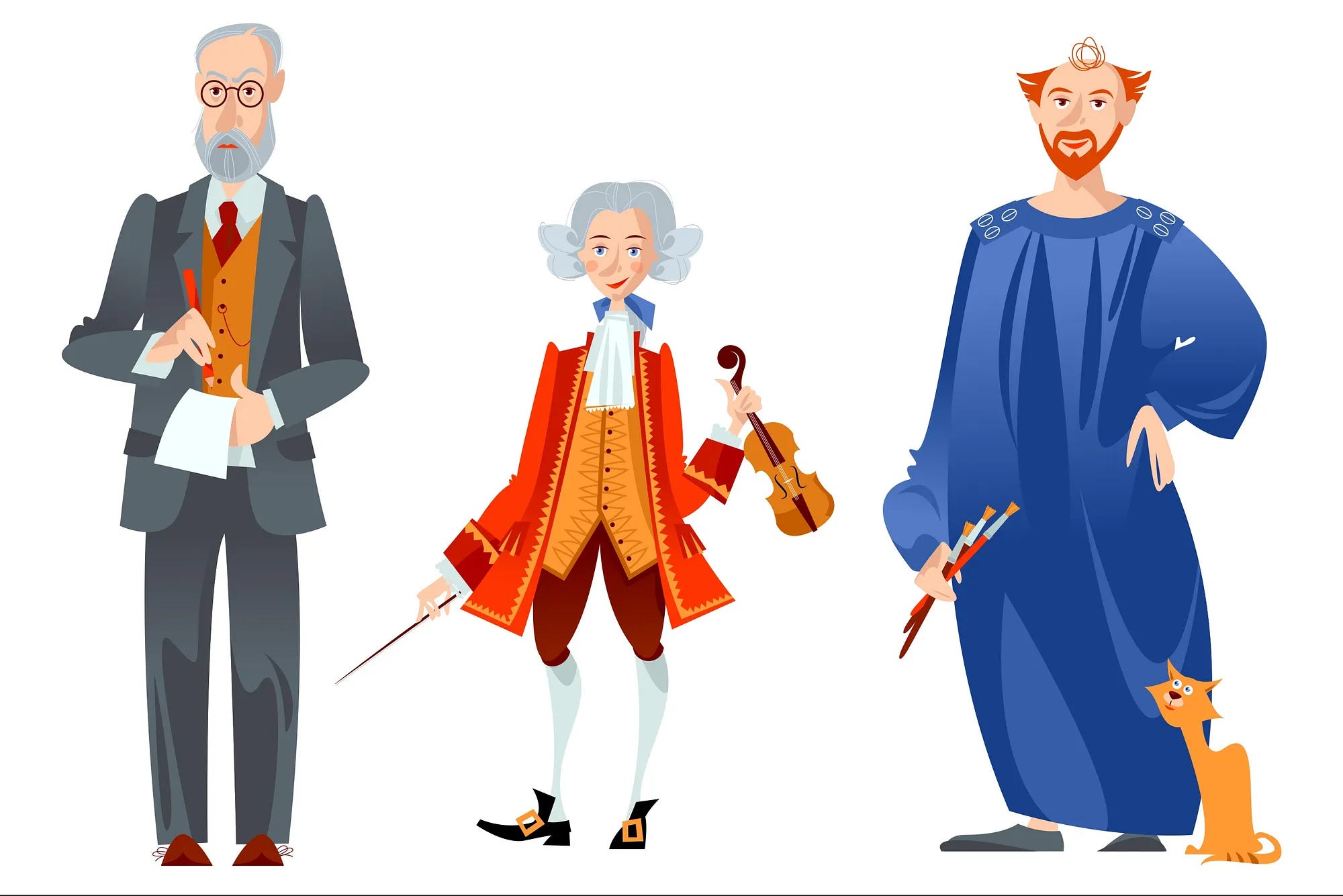
Cast of Characters (in order of appearance):
Nas Ocsicnarf, a being from the planet Ainrofilac in the star system SU
Sigmund Freud
Groucho Marx
Gautama Buddha
Socrates
Michelangelo
Emily Dickinson
Elizabeth Barrett Browning
Fritz Perls
Joseph Campbell
Marcus Aurelius
Queen Elizabeth I
Cleopatra
Henry David Thoreau
Satchel Paige
Scene: A misty place.
Enter Nas Ocsicnarf, looking puzzled. Groucho Marx is talking to Sigmund Freud.
Ocsicnarf: Why, I don’t recognize anyone here at all! Could one of you please tell me where I am?
Freud: Well, as far as we’ve been able to ascertain, it appears that we are in some kind of holding place waiting for directions as to what we should be doing or where we should be going next. I think I heard the word “bardo” mentioned. Who are you? You don’t look quite human.
Ocsicnarf: My name is Nas Ocsicnarf, and I’m from the planet Ainrofilac in the star system SU. I just ceased operating as a biological unit, and I was aware that in some of our ancient myths and traditions there is the belief that there is a continuation after our life ends. But it appears that I’ve found my way to the wrong one for members of my race or species.
Groucho: You can say that again! I’ve never seen anyone as strange looking as you!
Freud: Be kind, Groucho.
(Enter Buddha)
Buddha: Well hello! Who or what have we here?
Freud: Gautama, I’d like you to meet Nas Ocsicnarf who accidentally finds himself in a human afterlife instead of an afterlife for Ainrofilac beings, Ainrofilac being where Nas is from.
Buddha: I’m so happy to meet you! You certainly give me an opportunity to practice not being attached to seeing only former humans here. Attachment is the cause for all suffering, and I just make a point of being sure that I’m not attached to anything.

Groucho: There he goes again!
Nas: Do all humans try not to be attached? Or try to not suffer? What is the meaning of all this?
Freud: Well you see, my friend, we humans, while we were alive, often needed to find a meaning for our being alive. Gautama here sat under a tree and had some great ideas that he shared with a few people and voilà! He now has a following of millions! I should have had such a practice!
Nas: Practice?
Freud: You see, while I was alive, many people would come to me to see how they could alleviate their suffering. But unlike Gautama who had some rules, four noble truths and something called the eightfold path, I developed psychoanalysis!
(Enter Socrates)

Socrates: Do I hear you carrying on again about your developments? After all, you do remember that it was I who originally said: “Know thyself.”
Freud: My dear man, I never meant to slight you. I learned a great deal from you. Come and meet Nas Ocsicnarf from Ainrofilac.
Socrates: Do you know thyself?
Nas: Know thyself? Myself? What is the meaning of all of this?
Freud: Well, my dear Nas, as I was starting to tell you, when we were living humans a lot of us spent a lot of time trying to decide why we were living. Was there a meaning to our lives, or were we simply biological entities destined to live out our days taking in energy and giving out waste in an endless cycle until entropy wore us down and our functions ceased. I, for one, elaborated on Socrates’ brilliant injunction: know thyself. It certainly took up most of my life.
Nas: So everyone who was human found that to know themselves was the meaning of life?
(Enter Michelangelo)
Michelangelo: I heard what you were talking about, and I can say for myself that the best way to give meaning, the only way for me, was to create! Bring life to lifeless marble, paint the line and form of God himself and . . .
(Enter Emily Dickinson and Elizabeth B. Browning)
Dickinson: And write with words so spare that volumes are contained within a line!
Browning: Or write of love, love which truly gives meaning to life!
Freud: (muttering to himself) Love and work, work and love.
Nas: So to create gives meaning to a human life?
(Enter Fritz Perls)
Perls: Wait a minute! I do my thing, and you do yours. Don’t push the river. It flows on its own. I and thou, here and now is the only reality.
(Enter Joseph Campbell)
Campbell: Follow your bliss!
Nas: Do your own thing? Follow Bliss? Who is this Bliss?
Groucho: Sometimes a cigar is just a cigar.
Freud: Hey! I said that!
(Enter Marcus Aurelius)
Marcus: Mark how fleeting and paltry is the estate of man, yesterday in embryo, tomorrow a mummy or ashes. So for the hair’s breadth of time assigned to thee live rationally, and part with life cheerfully, as drops the ripe olive, extolling the season that bore it and the tree that matured it.
Nas: I’m very confused!
Freud: He does tend to get carried away with himself.
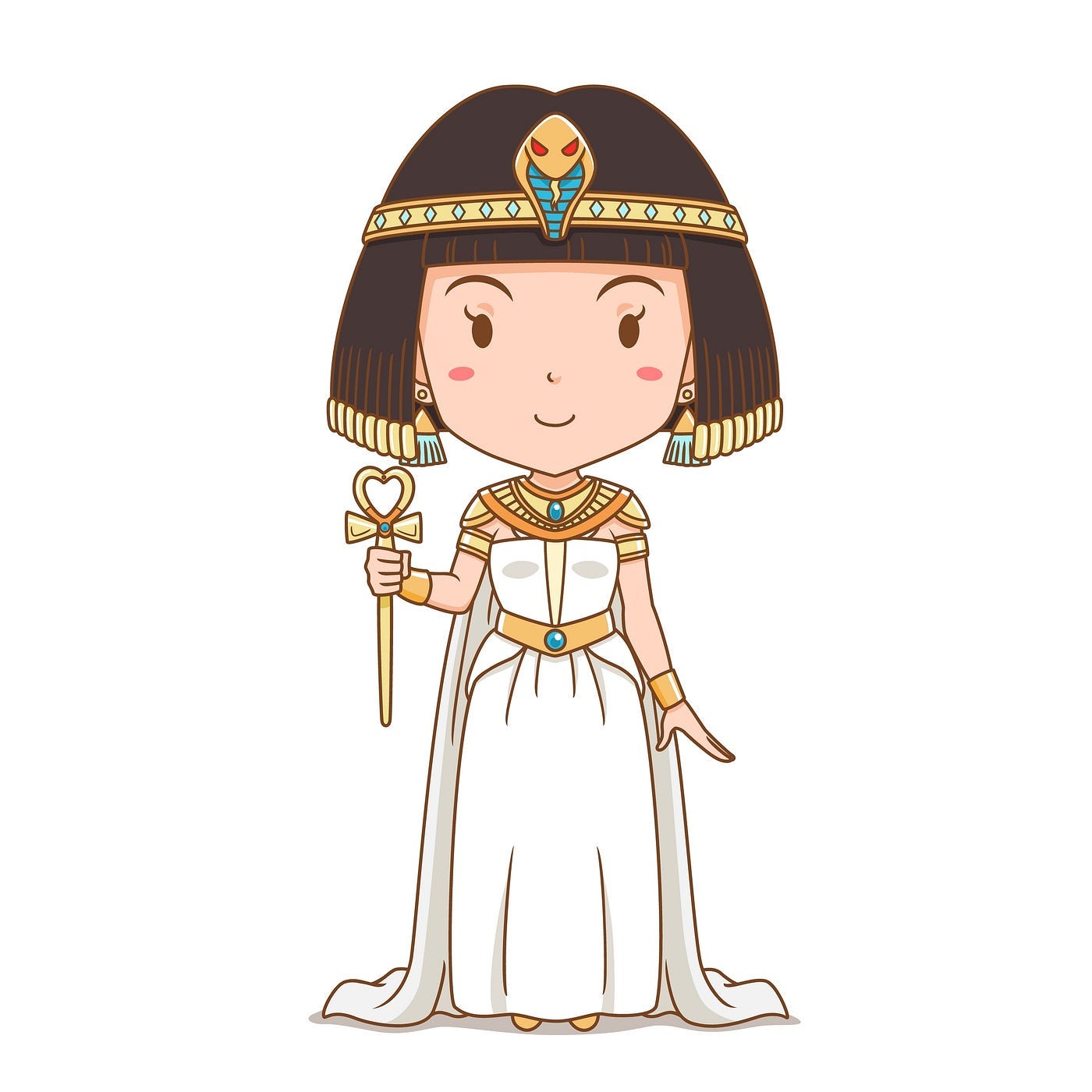
(Enter Queen Elizabeth I and Cleopatra)
Elizabeth: Cleo and I couldn’t help but overhear . . . we think that the meaning of life is to get power and hang onto it! The more you can control others, the environment, material wealth, armies, navies, the better chance you have of living the way you want to live! After all, you can buy art!
Cleopatra: You bet!
Nas: So humans gave meaning to their lives by knowing themselves, creating art, doing their things, following Bliss and getting power, wealth, love . . .
(Enter Thoreau)
Thoreau: What’s all the discussing! I haven’t heard so much excitement since I arrived!
(Enter Satchel Paige)
Paige: The social ramble ain’t restful!
Freud: Nas here lost his way to his own afterlife, and accidentally found himself with us, so everyone is trying to tell him what the meaning of human life is.
Michelangelo: To create!
Dickenson and Browning: Right!
Buddha: Freedom from attachment!
Socrates: To know thyself!
Freud: And there are so many more opinions . . . we have a fellow named Frankl who maintains that humans must align themselves with a cause greater than themselves to find meaning in life. And J.S. Bach, a legend around here, maintained that music gave meaning to a meaningless life and whose Chorales got him out of here and on to his next assignment faster than anyone I’ve ever heard of! Then there are some people here who go around quoting the Baltimore Catechism. Question: Why did God make you? Answer: God made me to know Him, to love Him, and to serve Him in this world and to be happy with Him in the next. A rather quaint concept.
Thoreau: Well, I’ve been considered somewhat of an expert myself. On earth I’m even being quoted on Celestial Seasonings tea boxes now!
Dickenson: So is everyone, smartass!
Nas: What does it say on the tea box?
Thoreau: Well, ahem. Let’s see. Oh yes, this one’s for Michelangelo:
“I know of no more encouraging fact than the unquestionable ability of man to elevate his life by a conscious endeavor. It is something to be able to paint a particular picture, or to carve a statue, and so to make a few objects beautiful; but it is far more glorious to carve and paint the very atmosphere and medium through which we look, which morally we can do. To affect the quality of the day, that is the highest of arts. Every man is tasked to make his life, even in its details, worthy of the contemplation of his most elevated and critical hour.”
(All applaud.)
Nas: That sound pretty much like what we do on Ainrofilac.
Dickenson: We never know how high we are — Till we are called to rise — And then, if we are true to plan — Our statures touch the skies.
Nas: Ooops! I can feel a tug on my traeh, and I suspect that means my misassignment has been discovered! I think I am going to . . .
(Nas disappears. A loud cough, then a resonant Voice says: “Carry on.”
The End
That’s quite the rock group you’ve assembled. I think they’re going places… 👍
😁👏👏👏🔥🔥💕💕