
Resilience
Defenses and their purpose

After writing about Self, Identity, Money and Loss last week, I had some further thoughts that I decided to write about this week.
There are some who believe that hardship “toughens” us up. Also that exposure to bacteria makes us more resistant to infection, giving our immune systems a chance to strengthen. I too believe that there is some validity in both these ideas, except that hardship in childhood––trauma, abuse, illness, neglect––is not desirable for toughening. Life will surely do that in good time without it occurring prematurely or intentionally. And sometimes exposure to bacteria can toughen us up, but they can also kill (I say this as a sepsis survivor).
Just as we wouldn’t think punching a pregnant woman in the belly would be “good” for her unborn child to “toughen it up” for birth, abuse, trauma, and neglect are all damaging to a child during the early formative years in which the sense of self is being developed.
What might ostensibly be seen as “toughening” (see “rationalization below”) actually results in the child developing defenses instead, defenses which serve it well at the time and which little humans in their natural wisdom develop in reaction to less-than-ideal parenting or circumstances. Defenses can be problematic, however, if we maintain them past the time in which we need them and carry them with us into adulthood.
What are defenses?
Psychological defense mechanisms are unconscious mental strategies used to protect the ego (self) from shame, anxiety, or distress arising from painful or unacceptable thoughts, feelings, or reality. These coping strategies—ranging from primitive (denial, projection) to mature (humor, sublimation)—help manage stress but can become harmful if used excessively to avoid reality,
Developed early in response to trauma and misfortune before the Self (capital “S”) is fully formed, defenses are created to protect the Self. Abuse or neglect can create these states or feelings which might then become unacceptable and get buried in the unconscious, often getting in the way of our being able to live lives free from anxiety, depression, fear, or shame, the very emotions they were created to protect us from. The “cure” becomes the “cause.”
Why would these feelings or urges be unacceptable?
Most of us raised by parents view those parents as omnipotent when we are small and powerless. With “good-enough” parents who are loving and nurturing we develop into adults with a sense of “intrinsic value” (see article from last week: “Self, Identity, Money and Loss.” (link at end of this article)
With abusive or negligent parents, the unformed and malleable psyche of the child takes on the responsibility for the abuse. After all, they might reason, consciously or unconsciously, “I must be bad to be treated this way. I must deserve it. Otherwise why would it happen?” The child is dependent on the parent(s) for food and shelter, for it’s very life, and so it’s too dangerous to view the parent as being wrong, bad or evil.
In addition, the child, being powerless, often compensates for this powerlessness by feelings of omnipotence, a belief that he or she is responsible for much of what happens. If there is misfortune, often the child feels that it’s their fault (this is often the case in divorce unless great care is taken).
The Scottish psychoanalyst Fairbairn famously said: “it is better to be a sinner in a world ruled by God than to live in a world ruled by the Devil” (Fairbairn, 1952.)
That sentence is worth reading a second time.
What does it mean? The young child views their parent as God, the purveyor of food and shelter, approval and disapproval, so when the parent is abusive/negligent, the child makes him/herself wrong, the “sinner,” instead of viewing the parent (“God”) as being flawed which would be far too dangerous considering the child’s dependency on the parent.
What are some of the defenses a child might develop and carry into adulthood?
Denial. The refusal to accept reality or "what is.” (Often this is the defense used by alcoholics and substance abusers. “I don’t have a problem. I can quit anytime.”)
Repression. Unconsciously blocking troubling thoughts or memories. (Huh? I don’t remember that!”)
Projection. Attributing one’s own unacceptable feelings to someone else. (Sometimes heads of state use this a lot!)
Rationalization. Creating logical justifications for problematic behavior. (“The Devil made me do it.”)
Reaction Formation. Behaving in a way opposite to one’s true, anxiety-creating feelings. (“I’m going to climb mountains because I’m afraid of heights.”)
Displacement. Redirecting emotions from the real target to a safer substitute.
Sublimation. Transforming negative impulses into productive, socially acceptable actions. (Often creative endeavors can be the result of sublimation, and more than one artist has been thought as redirecting unacceptable urges into his or her art.)
Regression. Reverting to childlike behavior to handle stress. (We are all likely to regress under certain pressures: being sick, or as they say in AA: “hungry, angry, lonely or tired. HALT.”)
Defenses are sometimes divided into categories:
Primitive/Pathological: Often distort reality severely (e.g., denial, acting out, splitting: seeing a person as all-good or all bad), common in young children or high stress.
Neurotic: Common in daily life to avoid discomfort (e.g., rationalization, repression, projection).
Mature: Adaptive, constructive ways to manage anxiety (e.g., humor, sublimation, suppression)
While meant to be protective, and for the young child they often are, relying on these mechanisms can cause long-term harm to relationships and personal growth by preventing individuals from addressing the root causes of their anxiety.
My conclusion is that there is no substitute for a good foundation intentionally created by informed, loving parents. Soon enough life will provide difficulties we are all subject to, and the “toughening” will begin without our having to be clobbered by trauma and abuse before we’ve developed mature coping strategies. What some psychologists call “optimum frustration” (just the right amount of frustration so we can grow psychologically) will ideally help us create one of our most valuable resources:
Resilience.
****************
Dear Patricia,
Thank you so much for your take on Resilience -- I've come to believe that it is my super power! Don't get me wrong, I had a wonderful childhood with loving parents. HOWEVER, I do have "daddy issues" because I am the oldest of 3, and my father seemed (when I was growing up) to favor my brother over me. And then he left us when I was around 12 and hooked up with a close 'friend' of my mom's!!! And they ended up getting married. So, I have been dealing with feelings of abandonment for quite a while. I started my own therapy journey only when I was in my 60s, and now am in my 70s, and do feel like I've made good progress -- thanks to good therapists, my commitment to myself to get better, and growing self-compassion. And of course RESILIENCE! I resonate with your thoughts here and I appreciate you!
Best,
Gaye
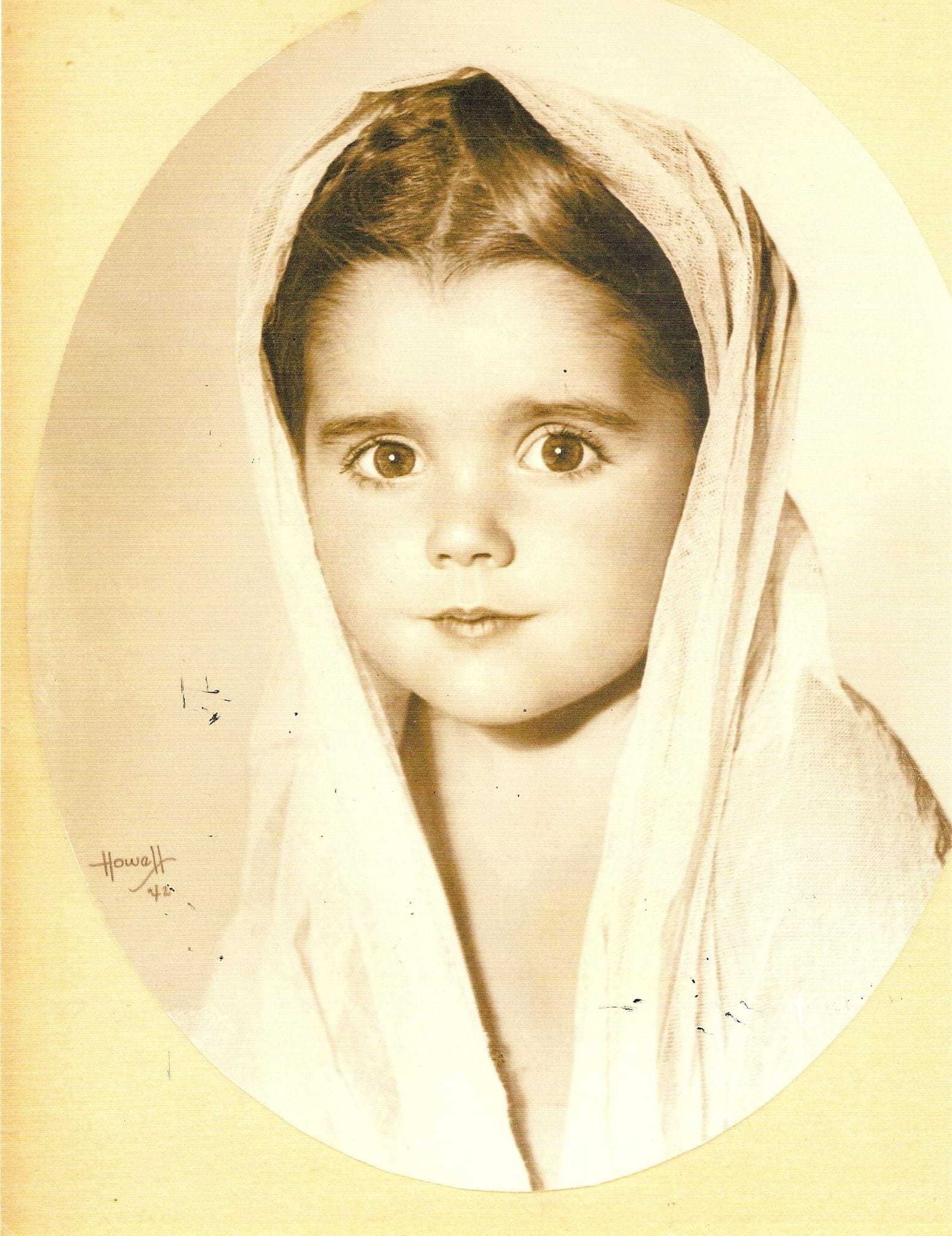
Patricia, I can’t stop looking at this photo! It’s so recognizably YOU!