
My Mother
Complex, wounded, tragic, hurtful…

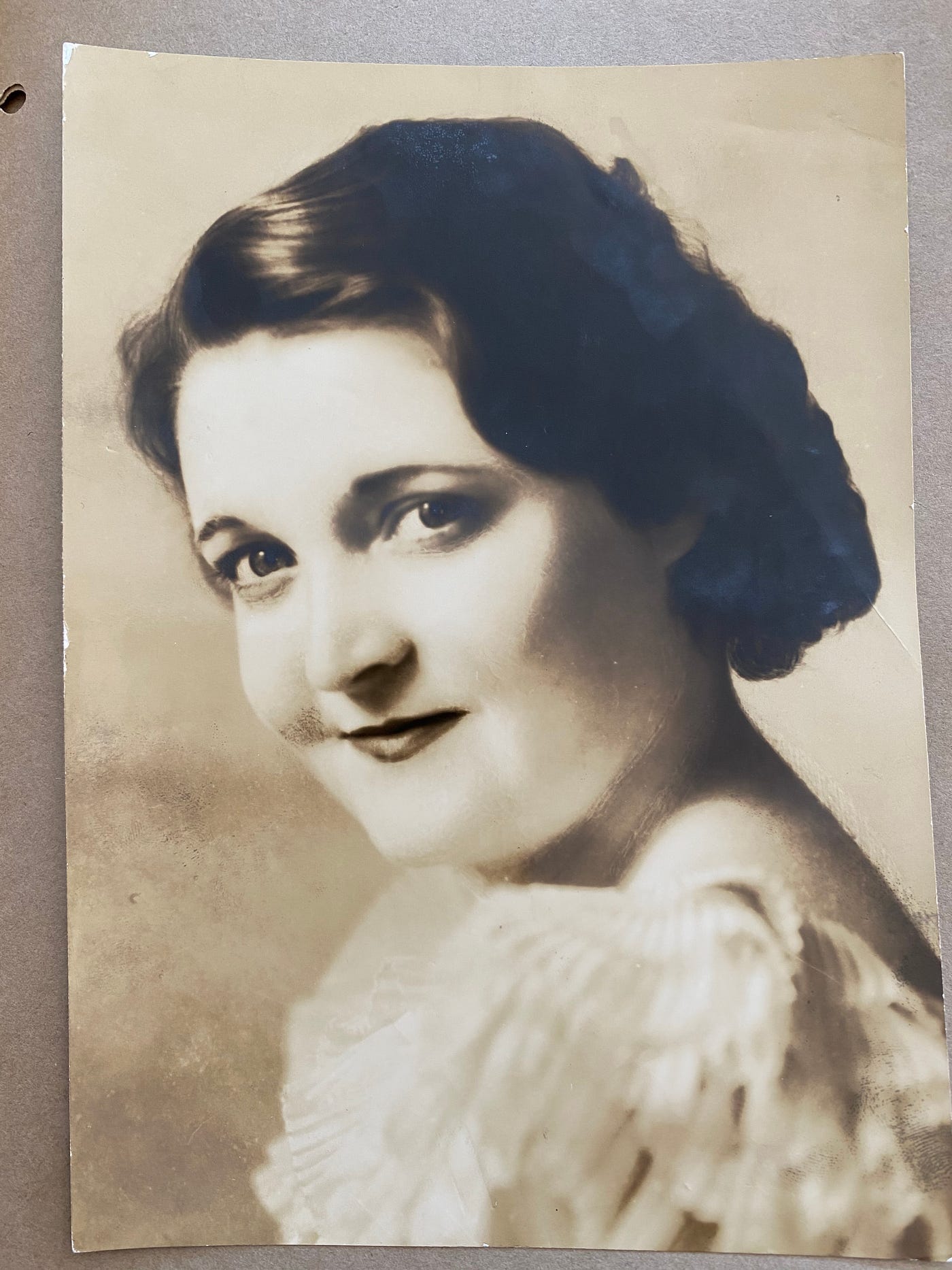
My mother: beautiful, talented, intelligent. When I was a young child (1938–1948) I idealized her. To me she was ethereal, beyond my reach, her feet not touching the ground. A magic, luminous creature. I longed for her affection, occasionally getting a hug or comment about how she loved me and my siblings, but I have no clear memory of her ever holding me.
She was the “safe” one, my father being unpredictable, explosive, irrational at times. Much later I found out he was bi-polar, undiagnosed and untreated. But there were times when he was loving and I would sit on his lap while we listened to music, music being so much a part of our family life that it was constantly either being performed or played on records or the radio. He could demonstrate the affection my mother couldn’t during those times when he wasn’t being in the throes of his mental illness.
One story my mother liked to tell was how, when I was an infant sleeping, I had kicked my blankets off. My father, in one of his irrational rages, came to the conclusion that I’d kicked my blankets off on purpose (to spite him) and spanked me while I was sleeping. There seemed to be no way that he could see me as not having the cognitive ability to intentionally do anything, must less something to spite him. My mother, however, told the story to point out how, in her wisdom, she solved the problem: she came up with the idea of getting a couple of large safety pins, and pinning the blankets down so I couldn’t kick them off! It never occurred to her that her thinking was almost as irrational as his, that her “solution” didn’t address the issue which was that he was wrong to have spanked me in the first place! And her “solution” made me somewhat claustrophobic for most of my life.
For many years I thought that she was wise. She was usually calm and cheerful, singing as she went about her housewifely chores. She had been singing in the chorus of the opera “Madame Butterfly” in Honolulu when she met my dad, the star, who had been brought over from the mainland to sing Pinkerton in that opera. She had been living there because her family had sent her there to “get over” falling in love with a piano teacher she’d had while living in Los Angeles. He was considered “inappropriate” to my mother’s family. Going from piano teacher to opera tenor was hardly an improvement in the eyes of her family, but they (primarily grandmother and uncle), a family of some means and delusions of being aristocratic, gifted her with a house and car in Los Angeles to begin her life as a wife and, very soon after the wedding, a mother.
I never saw the cracks in my idealization of my mother until I was an adolescent. The entire family, parents and four children, moved to Italy shortly after the War (1948) where my father hoped to sing at La Scala. That’s when the “troubles” began.
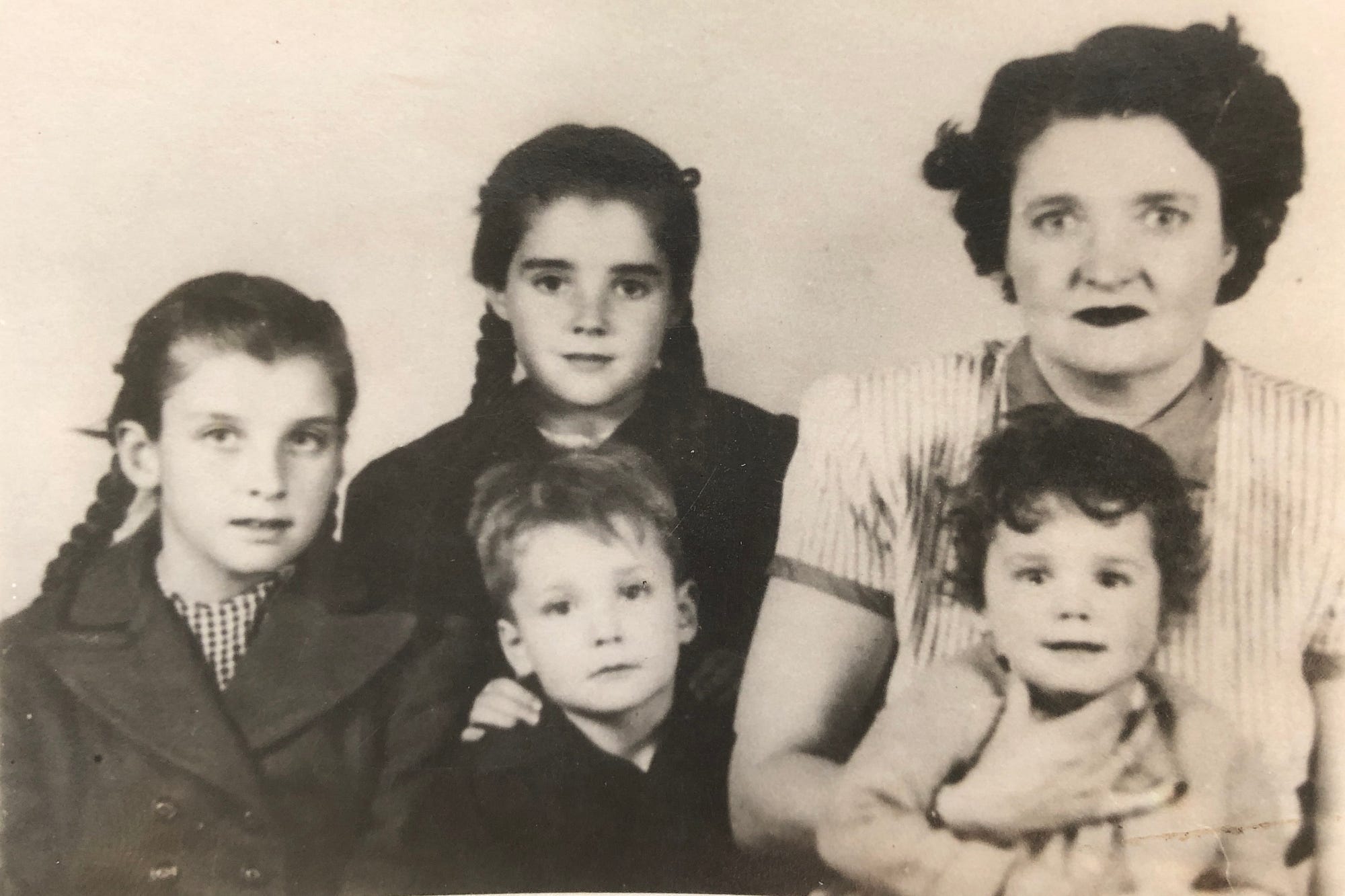
My father’s bluster was deflated by illness not long after we settled in Rome, and his rages became less frequent. My mother’s fear that she managed to keep under wraps became more apparent as she attempted to negotiate running the household, putting her children in schools that were satisfactory, and carry on day-to-day living, even with considerable household help. She received a small monthly stipend from her family. Her goal always being to “look good” to outsiders. No flaws in character, an image of someone to be admired, whose family had to maintain appearances as well.
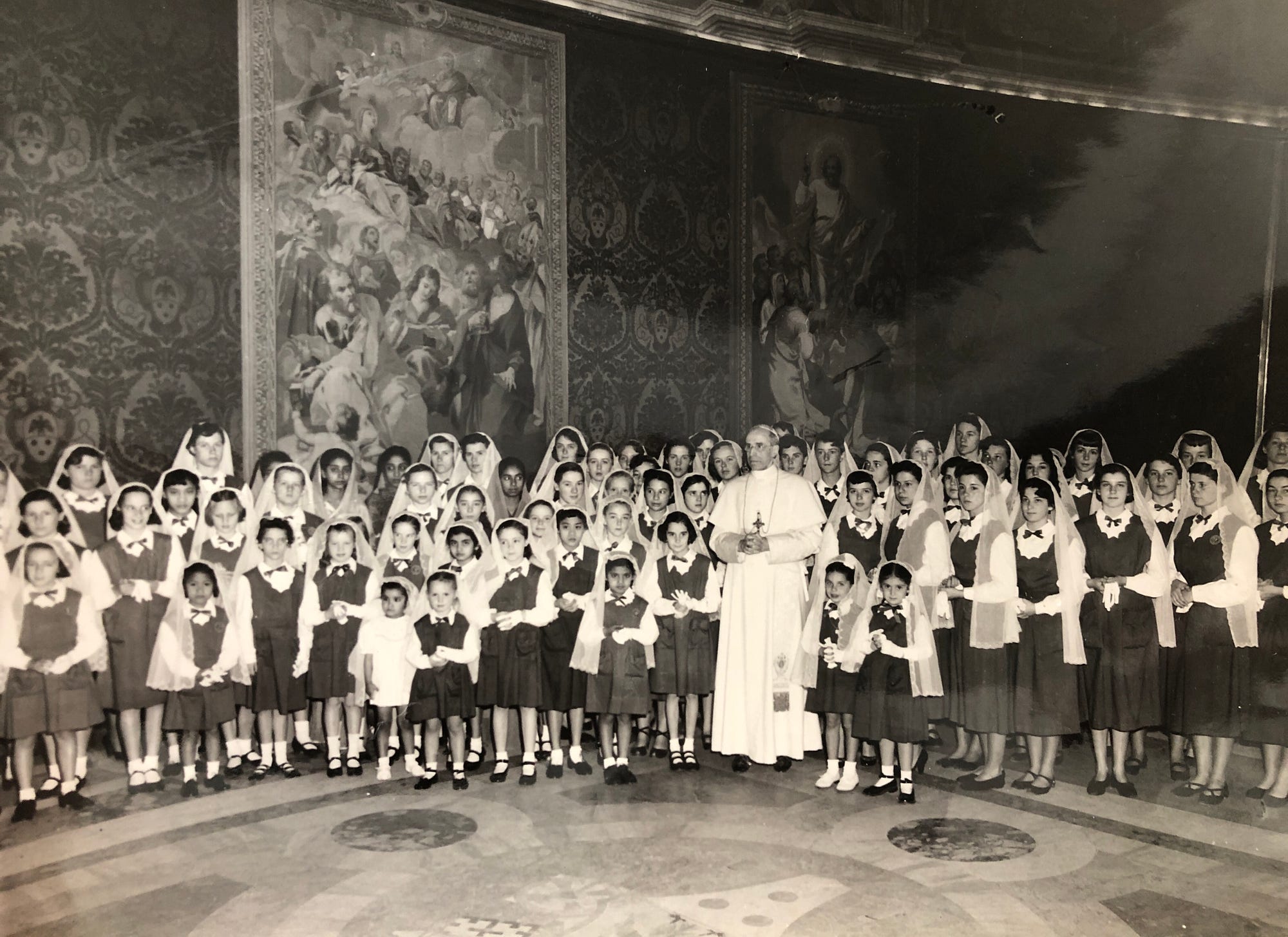
We went to a private Catholic school, Marymount International School, after a disastrous attempt at having us go to Italian school. We had yearly audiences with the Pope, and religion was of paramount importance.
There was conflict between my mother and father. My father accused my mother of having an affair with a priest. My mother had ostensibly become increasingly religious herself, going to Mass every day, presenting herself as above reproach. A holy person. One would think she was running for sainthood. In the face of my father’s accusations, my mother, horrified, denied everything. And yet she would meet with said priest frequently to study “philosophy” and religion. Behind locked doors.
On a vacation to the Amalfi coast, she left my father back in Rome while taking a nurse and the priest with her. One week I went, another week my older sister Kathleen went. She told each of us to refer to the priest as our “uncle” because the “common” townsfolk “wouldn’t understand” a relationship like theirs and it would create a scandal. It did not go unnoticed by me that she was asking us to lie, and it became blatantly apparent to me that there was a contradiction in what she was teaching us, to be honest, empathic, caring , ethical— and what she was asking us to do for expediency. Meanwhile, my father was suffering and confiding to me how cruel my mother was to exclude him like this, and she would confide to me that he was delusional and wrong. I was torn. In spite of my father’s reign of terror when I was little, he also provided those times of affection and gestures of love, and I had great compassion for him. I also loved my mother, although my idealization of her was lessening.
During this period of time, each of them, separately, attempted suicide. My father by taking an overdose of pills, my mother by cutting her wrists.
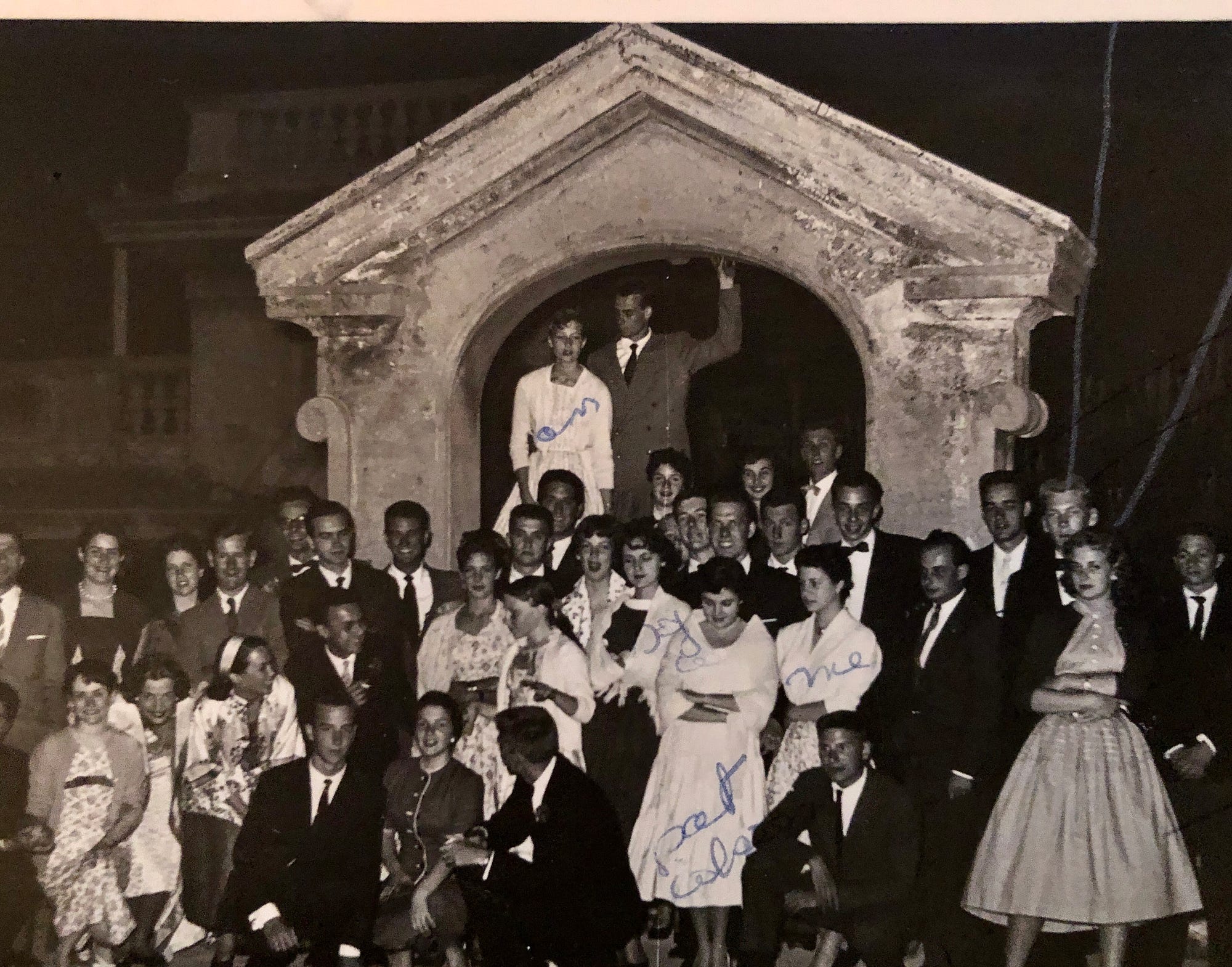
The day my mother cut her wrists is forever seared in my memory. I had a group of friends who, it turned out, became life-saving––all of us coming from some kind of dysfunctional home: alcoholic mothers, philandering fathers, conflict and international intrigue. My friends were the daughters and sons of diplomats, writers, actors, bohemians, all of us finding ourselves in Rome at the same time by chance, and we clung together not knowing at the time how important we were to each other until years later and we had the perspective time affords.
We had a maid, and even as I write that I realize how un-PC the word “maid” is. But that’s what we called her: almost a member of the family, a woman who lived with us and managed the household and did the cooking and cleaning.
As I was “hanging out” with a group of friends at my place one Sunday, Vittoria, the maid, came into the living room, took me aside, and said that my mother wanted to see me. My mother (as well as my father) had had multiple illnesses, was in and out of the hospital for one thing or another, and this particular day she was in bed recovering from something, I forget what. I went to her. She told me to call “Louise,” the nurse my parents could call on who would come to care for them when needed. I looked at my mother. Her wrists were wrapped in gauze. She had cut them.
I had to go to my friends and tell them that they had to leave because my mother wasn’t well. Everyone left except for my friend Margie who stayed by my side (to this day we are best friends, 70 years later!). The feelings I had were terror, anger, resentment, fear. I didn’t want to lose my mother! And I didn’t. Then.
Years later when I mentioned this event to my mother, which had been traumatic for me, she said “Oh that. That was nothing!” I told her it hadn’t been “nothing” to me.
My mother’s childhood was seldom talked about, but over the years what I managed to put together was that her mother, an aspiring opera singer, had married her father, divorced him, moved to Paris to study singing and then married a French banker having two more children.
My mother, apparently in the way, was sent at 13 to Los Angeles to live with her grandmother (her mother’s mother). They lived in the Ambassador Hotel. She never lived with her mother again, her mother dying of alcoholism at the age of 49. My mother, in a rare moment of revelation, once told me that when she was little, her mother had locked her in a dark closet, and she had thrown up “all over the shoes.” Her grandmother was a stern and punishing matriarch, and my mother was unhappy and felt unwanted and controlled.
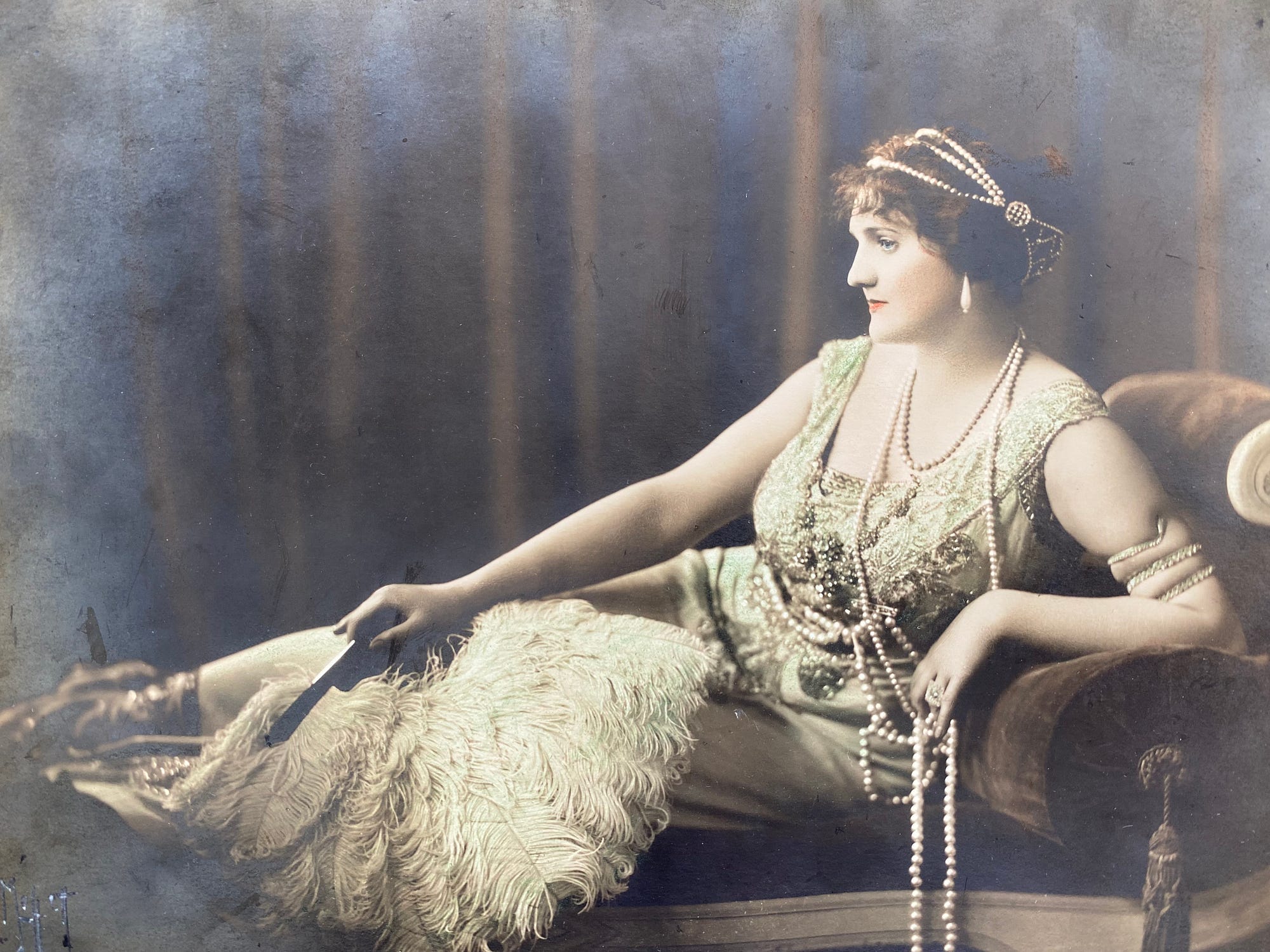
As I got older, the de-idealization of my mother increased. I had completely bought into the image she wanted to present to the world: that of a good, caring, empathic religious person, above reproach. But I started to discover that much of this “image” was superficial.
She considered herself wise, able to make Solomon-esque decisions. In addition to the misguided decision to get safety pins to pin my blankets down when I was an infant, her “wisdom” proved to be misguided again when my teenaged brother shot my younger sister in the leg with a BB gun. My mother gave him the choice of having his gun taken away or having my sister shoot him in the leg! He chose to be shot rather than give up his BB gun! And she thought that this was an intelligent way of handling the matter. I guess it hadn’t occurred to her that the truly wise thing to do would have been to teach him that it was wrong to shoot anyone! And take away his gun.
Aside from the cruel treatment of my father (they eventually separated and he returned to the U.S.), she was blind to other ways in which she damaged members of her family. Once, my younger sister, a young teenager, brought home an artwork she’d created in school. My mother, needing to maintain her reputation of being the artist in the family, at first praised my sister for her artistic offering, then proceeded to cut up my sister’s artwork to make a collage of her art fully expecting my sister to feel pleased to have her piece so valued as to be used in one of my mother’s artistic creations! It was supposed to be a great compliment to my sister!
Much later, the same sister, pregnant and unmarried, went to my mother, now living in Boston. My mother’s reaction was to be horrified! Concerned primarily what “her friends” would think, not how my sister would cope. My sister was going to bring “shame” on my mother’s reputation, on the reputation of the family! She frantically found a home for unwed mothers and sent my sister there, alone and afraid and shamed, to spend the rest of her pregnancy and then give up the baby for adoption. The experience for my sister was a trauma from which she never recovered.
Gone these past almost-30 years, my mother died of end-stage lung disease, rheumatoid arthritis wracking her body for the previous 50 years. Defensive to the end, she was unreachable and superficial. I had given up trying to “reach” her, “connect.” I had come to realize that she did not have the capacity.
And I grieve the loss of a mother I never had.
This Mother’s Day, I’m remembering my mother with compassion. Years of therapy and living have dulled the outrage and anger I carried with me for far too long, and I don’t feel the “charge” I used to feel. But “neutral” is not the way I would prefer to feel either.
My goal is to someday remember her with love.
I’m getting there.
Man Patricia, that is quite a story. Both parents sound unbelievable. You are pretty amazing to have survived such insanity.
Dear, dear Patricia. I am wishing you a Happy Mother's Day for yourself as well as for your two beautiful daughters. You have endured so much and have emerged a kind, loving and compassionate person. Although we would never choose it, a lot of what forms us is the pain we go through.
I remember asking my analyst, How can I forgive my mother? His reply which caused me to pause for quite a while, "When there is enough love".